
By 2026, I’ve grown quite selective regarding smartphone displays.
Samsung Galaxy and Google Pixel – my preferred Android phone makers – evidently provide stunning, vibrant, and extraordinarily detailed screens.
Yet they lack in a critical area that matters increasingly to me: eye health. Spending countless hours daily focused on my phone (who doesn’t?), I could no longer overlook the persistent eye strain, headaches, and cognitive fog.
Still, I had not discovered a device meeting all my requirements – until now.
Is TCL the solution?
Unveiled at IFA 2026 in Berlin, the TCL P80 Ultra resembles other phones introduced by the renowned TV manufacturer. It sports the ‘Ultra’ branding, but in today’s market, that doesn’t necessarily indicate superior quality.
So, what makes it feel perfectly suited for my needs?
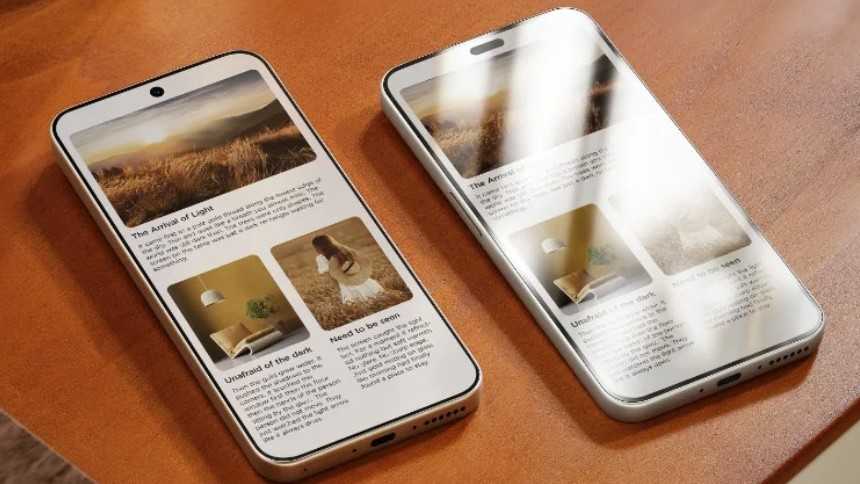
To start, it incorporates TCL’s unique ‘Nxtpaper’ technology. True to its name, it strives to mimic the appearance and texture of actual paper with a matte finish that nearly erases glare and harsh reflections.
TCL
Having tested this on earlier Nxtpaper devices, I can confirm it’s the real thing. If my word isn’t enough, display safety specialists TÜV Rheinland have granted the P80 Ultra a ‘Full Care Display’ certification, validating its effectiveness in safeguarding your eyes. I genuinely wish more brands – particularly Samsung and Google – would emulate TCL’s approach here.
Nxtpaper and OLED combined
As a part of this emphasis, the P80 Ultra includes TCL’s dedicated Nxtpaper Key on its side. This enables users to effortlessly switch from the standard color interface to a minimalist, black-and-white ‘Max Ink Mode’ to minimize distractions, transforming it essentially into an e-reader.
“But don’t a lot of TCL phones feature the Nxtpaper option?” you might ask. Indeed, the variety available these days is quite broad. However, none have managed until now to incorporate what distinguishes an exceptional phone display: OLED.
TCL
Basic LCD panels are adequate, yet they cannot compare to the rich, vibrant colors and profound blacks provided by OLED. Achieving both OLED and a glare-free, eye-health-centered display feels like such an indulgence.
Are eye strain and headaches a thing of the past?
However, there’s one final aspect I had to confirm: would it still trigger headaches? After unintentionally realizing that I was reactive to PWM (Pulse Width Modulation) dimming, a feature prevalent in nearly all OLED displays, I was worried the P80 Ultra would trouble me significantly.
Fortunately, TCL addressed that concern. The P80 Ultra features an extraordinary 3840Hz, placing it well outside the risk range for most users. In contrast, the Galaxy S26 Ultra and Pixel 11 cap out at merely 480Hz – firmly within the danger zone for eye strain, headaches, and nausea.
TCL
Even then, PWM dimming only activates at lower brightness levels. At higher brightness settings, it shifts to traditional DC dimming, which has no negative impact on those sensitive to PWM.
The TCL P80 Ultra’s display is essentially the perfect fusion of stunning visuals and superior eye health. While specs elsewhere may not shine, obtaining this caliber of display for just £480 feels like an incredible deal.
It’s no wonder that the P80 Ultra earned a spot in our best of IFA awards. Discover what else made the cut.
Conclusion
A Display That’s Exceptional
To sum up, the TCL P80 Ultra is a treasure for those of us weary of troublesome eye strain from other smartphones. With its paper-like display and OLED excellence, it’s akin to having your cake and eating it too – all without any headaches!