

After countless speculations, the legendary foldable iPhone appears poised to finally materialize.
No matter what moniker Apple chooses – whether it’s the ‘iPhone Ultra’ or just ‘iPhone Fold’ – it’ll generate significant buzz for a product category that remains exceedingly specialized.
Yet, I’m struggling to muster enthusiasm, and not merely because I’m entrenched in the Android ecosystem.
Even if it stays limited to China, Xiaomi’s latest 18 Fold seems to outperform in the realm of wide foldables. It thrives in three crucial aspects that the foldable iPhone (according to leaks) and Samsung’s Galaxy Z Fold 8 simply can’t equal.
Camera compromises are unacceptable
The iPhone 17 Pro Max firmly holds its place among the premier camera phones globally. It’s an exceptional and remarkably flexible device for both photography and videography, and the forthcoming iPhone 18 Pro Max is expected to bring even more enhancements.
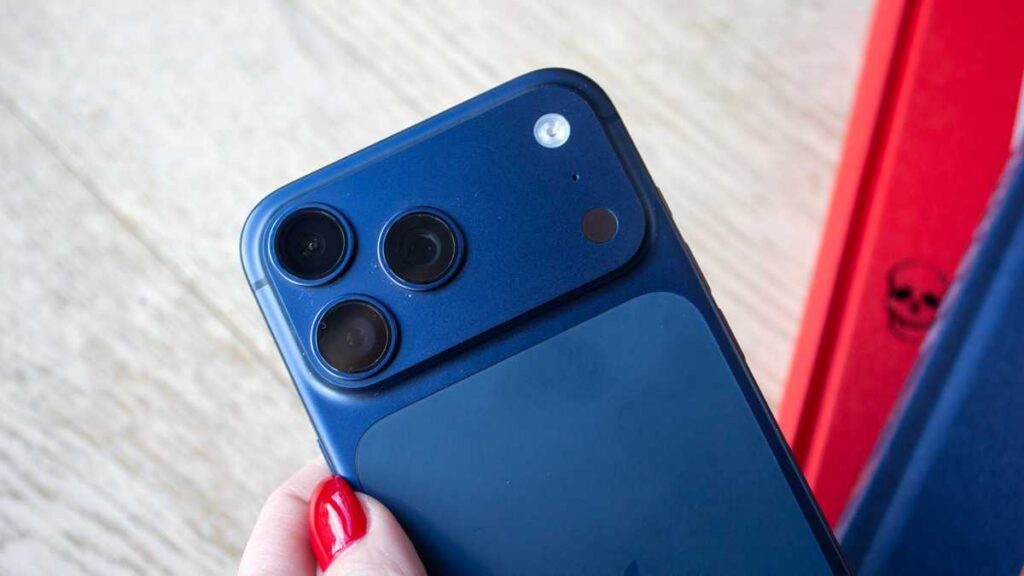
Conversely, Apple seems willing to make significant sacrifices on an even pricier model. All indications suggest that the iPhone Ultra will completely omit the rear telephoto lens, retaining only a 48Mp main camera and 48Mp ultrawide.
I likely don’t need to explain why this is critical. A telephoto sensor is essential for zoom photography, with the 17 Pro Max’s lens providing optical clarity at up to 4x magnification. It’s also incredibly beneficial for portrait-style shooting, collaborating with the main lens for depth perception.
Britta O’Boyle
By removing it, Apple is effectively indicating to potential buyers that zoom photography is not very vital for smartphones. I believe the audience I’ve shared a concert with at London’s O2 Arena would dispute that notion.
Xiaomi has rightly concluded that this feature is too important to exclude. The 18 Fold boasts a 50Mp periscope telephoto lens, offering a robust 3.5x optical zoom. Combined with high-quality main and ultrawide cameras, it provides significantly more versatility in its photographic capabilities.
In fact, no other popular foldable includes a dedicated telephoto lens. Until that changes, none can claim to be better than the Xiaomi 18 Fold.
An ideal battery and charging combination
In foldable devices, space for components is limited. Reducing battery capacity is frequently viewed as the only means to maintain a slim and lightweight design.
This is not the case with the Xiaomi 18 Fold. Despite measuring just 5.02mm when opened and weighing a mere 229g (lighter than the iPhone 17 Pro Max!), it houses a remarkable 6000mAh battery. If that doesn’t last a full day under heavy use, I would be taken aback.
How is this possible? The use of silicon-carbon technology, which enables much higher energy density, allowing larger capacities within the same profile.
Xiaomi
Importantly, it features rapid 67W wired charging, meaning a complete recharge shouldn’t take long. The 50W wired charging is also quite impressive.
In contrast, the foldable iPhone, based on regulatory submissions, is expected to have a dual-cell design with a combined capacity of 4883mAh, although Apple seldom discloses exact capacities. We understand that the iPhone’s hardware and software integration generally allows for longer battery life, but can it accommodate two screens? I have my reservations.
Regarding charging, the rumored 45W is decent by Apple’s norm, but still noticeably inferior compared to Xiaomi. Nonetheless, it’s noteworthy that the iPhone Ultra will support the convenience of Qi2-based MagSafe, which the Xiaomi 18 Fold lacks.
However, it’s abundantly clear which device stands out here, and it’s certainly not the foldable iPhone.
The pricing dilemma
It’s challenging to directly compare prices here, given that the Xiaomi 18 Fold seems destined to remain exclusive to China.
Its starting price of ¥10999 roughly converts to about £1,200/$1,600, but these figures are seldom indicative of what it would actually cost in the UK and US.
Xiaomi
Nonetheless, the iPhone Ultra could easily overshadow it in terms of pricing, and not in a favorable manner. Its initial price is anticipated to start at no less than £1,999/$2,099, potentially even higher.
Pricing remains the primary barrier preventing wider adoption of foldables. Unless Apple can manage to price the iPhone Ultra lower than an iPhone flagship and a decent iPad combined, it’s a hard sell for most consumers.
Now, if Xiaomi could expedite the release of the 18 Fold in Europe, it could solidify its standing. Until then, it will stay out of reach for many, which is truly unfortunate.
Conclusion – The Foldable Future Appears Grim
Looking for a foldable? Well, the iPhone Ultra seems as elusive as a congenial Geordie during peak traffic. Xiaomi’s 18 Fold appears to be the more intelligent option, if only it would make its way outside China. Until Apple adjusts its pricing, I’ll stick with my reliable flat mate.
