

Last week, Apple revealed its inaugural foldable smartphone. The iPhone Duo is set to be officially released on 23 October, with pre-orders commencing on 16 October. The starting price will be £1,999/$1,999 for the 256GB model.
Disregarding its poor naming, it is anticipated to shape the foldable industry for the foreseeable future. That’s the Apple influence.
Despite its almost guaranteed success (although its likely exorbitant pricing may influence things), I believe Apple has overlooked an opportunity here.
The iPhone Duo will support the Apple Pencil (USB-C variant) across both outer and inner displays. However, I view this as a half-measure that underscores where Apple could have outperformed Samsung early on.
A tentative first mover
Samsung has been a pioneer in the foldable market since its inception. It essentially defined the foldable segment with its Fold series, now at its eighth and finest version with the Samsung Galaxy Z Fold 8.
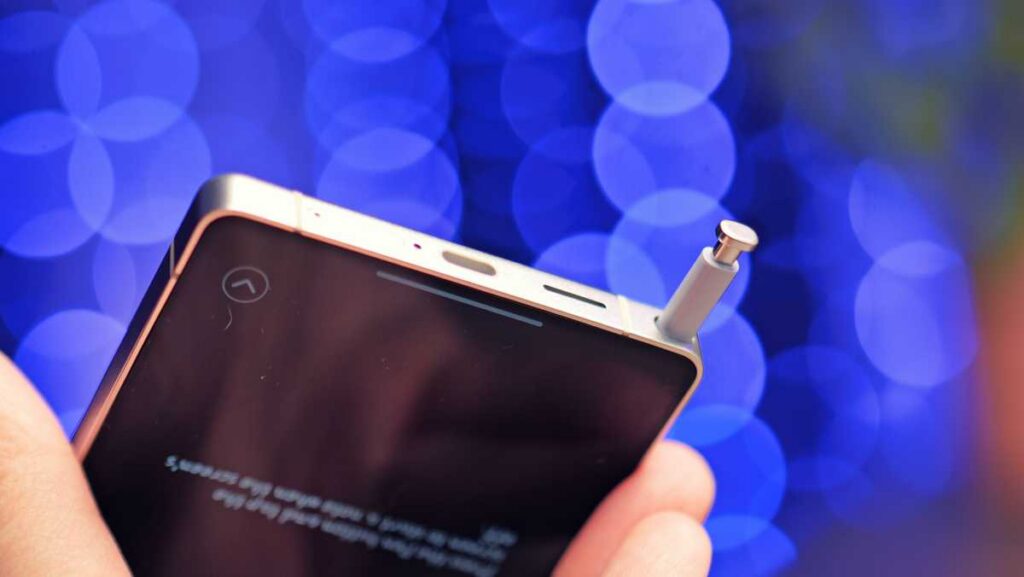
Nonetheless, one aspect it appears strangely reluctant – or perhaps incapable – of properly executing is its S Pen stylus system. I’m not referring to basic S Pen support, which the company has both added and removed over the years.
Luke Baker
What I mean is the type of comprehensive stylus integration that has become characteristic of the company’s flagship non-foldable smartphone line, most recently exemplified in the Samsung Galaxy S26 Ultra.
I’m not a dedicated stylus user. I don’t usually utilize Samsung devices in my everyday life; I’m not especially artistic; and if I prefer to take notes the traditional way, I stick to classic methods.
Yet, I still acknowledge the remarkable potential of this small tool, enhanced by the various AI and automation functions that have developed around it. Indeed, I’ve been actively encouraging Samsung to take what I see as the logical next step and equip its Fold series with the same internally stored S Pen technology.
An engineering challenge
Stylus inputs undeniably make significantly more sense on larger displays. They are perfectly suited for tablets, resembling the dimensions of traditional paper sizes many of us have used, from pocket notepads to A4 sheets.
Thus, a built-in stylus is far more logical to me on a book-style foldable than on a standard smartphone. The experience of writing and drawing would feel less limited than it does on the Ultra range.
Apple
It’s probable that the engineering costs in the past have been too steep to incorporate such a feature into a foldable. Early foldables struggled with inadequate cameras and small batteries – primarily due to limited space. Not with that clumsy split design, with ultra-thin halves united by a complex hinge mechanism.
Chris Hall / Foundry
However, those engineering obstacles appear to have been tackled. The emergence of silicon-carbon technology, for example, has enabled manufacturers to integrate much more compact batteries.
Samsung’s hesitation to embrace this technology, given its tumultuous battery history, might be what has prevented it from fully committing to the S Pen with its Galaxy Z Fold line.
I’m not quite certain why competitors like Honor, Motorola, and Oppo have also refrained from this approach. Perhaps it relates to costs, or maybe these brands perceive the demand for such a feature as insufficient.
Regardless of the rationale, it has paved the way for Apple to make a strong entry with an outstanding feature after arriving fashionably late to the foldable scene. Unfortunately, there will not be an Apple Pencil Mini – and that’s unfortunate.
A stylus isn’t the only aspect the new Duo is lacking.
