

Unlock the Possibilities: DIY Fitbit Air Accessories
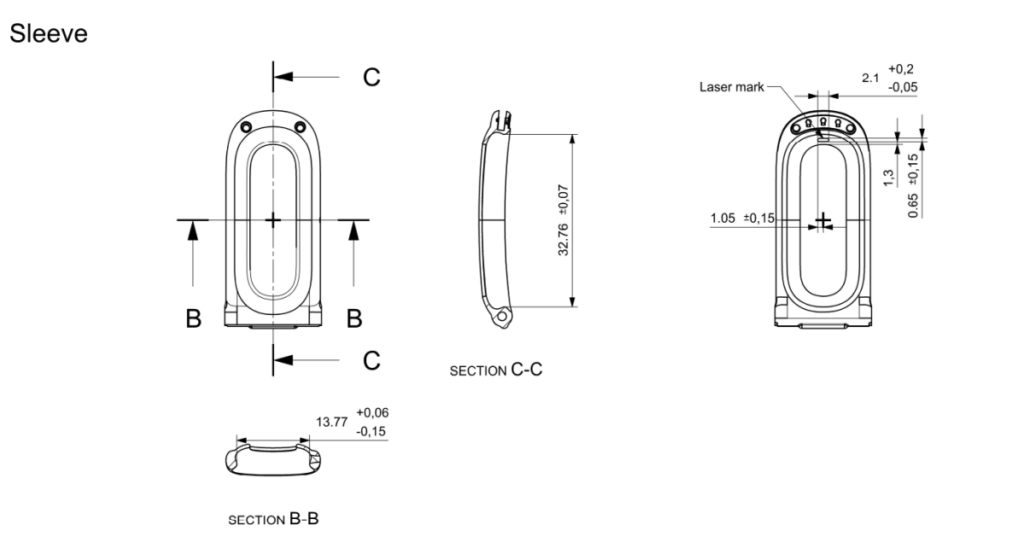
In a notably consumer-friendly initiative that seems increasingly uncommon, Google has unveiled the schematics for the latest Fitbit Air screenless fitness tracker, effectively enabling anyone to create their own accessories using the company’s official dimensions and suggestions.
On the Google Store, there’s now a section devoted to the Fitbit Air’s measurements, including the inside seam. Google also shares 2D CAD designs of the Fitbit Air, alongside “essential mating dimensions, tolerances, and mating force specifications – including attach and detach force – to assist in constructing a high-quality accessory band.”
Not lacking in guidance, the page further outlines the types of materials recommended for band construction (as well as those advised against), along with various technical specifications essential for the Fitbit Air’s optimal functioning.
Dynamics of Fitbit Air Bands
Among these specifications, Google explains how the current bands utilize a tension-based snap-in mechanism that must be accurately replicated to guarantee that the device remains secure, in addition to the necessity for the device’s sensors to maintain consistent contact with the user’s skin to prevent any interruptions in data collection.
Made for Google Certification: Claim Your Badge
The page invites both individuals and companies of all sizes to utilize the materials provided, and encourages them to reach out for an official ‘Made for Google’ certification, which is granted to cases and other accessories bearing Google’s mark of approval.
This could lead to a multitude of diverse Fitbit Air accessories emerging, potentially from brands like Mous, Bellroy, Spigen, and others. However, with sufficient knowledge and the appropriate tools, you might even explore crafting your own or creating something like a charging stand using a 3D printer.
We could very well see various bands being designed, enabling the Fitbit Air to be worn in locations other than just the wrist. Enthusiasts have reportedly already devised their own bicep band options, for instance.
Fostering Creativity or Solving a Problem?
This announcement’s timing seems particularly relevant, given recent reports indicating that Fitbit Air users with smaller wrists faced challenges finding a comfortable fit with the standard bands offered.
Thomas Deehan / Foundry
Tackling the Size Dilemma
Since the default Loop Band adopts a ‘one-size-fits-all’ method, there’s limited adaptability; however, should someone manage to create a Fitbit Air band tailored for smaller wrists, it would effectively resolve an issue for Google.
Even though it would have been preferable for Google to provide a more diverse range of bands from the onset, this initiative does assist in filling a market void, and it might inspire a community of Fitbit Air aficionados eager to express themselves with more distinctive bands and add-ons.
In the brief time it has been available, the Fitbit Air has already gained recognition as one of the most discussed fitness trackers of the year, particularly noted for its inclusive approach to fostering better habits through the AI-supported Google Health Coach.
Concluding Thoughts: A Template for Achieving Success?
So, Google is throwing us a lifeline with these Fitbit Air schematics, isn’t it? Whether it’s a clever attempt to compensate for the faulty wristbands or a sincere effort to ignite creativity, only time will reveal. Just remember to bring your 3D printer along as you head out!
