

Anthropic’s AI USB-C Dongle – A Clever Solution or Merely Another Plastic Parcel of Deception?
The USB-C AI Frenzy – Because Apparently Everything’s AI These Days
So here’s the deal – Anthropic, the AI whizzes who believe their chatbot Claude is brighter than the usual bear, have released a USB-C connector as part of their development tools for Claude 3. And yes, the thing resembles the end of a dodgy HDMI cable more than an innovation for transforming AI workflows, but don’t judge a dongle by its exterior.
GadgetLad managed to get their hands on the product (thanks guys), and after some harsh hands-on evaluations—between lifting weights at my CrossFit gym and attempting to stop my silly Jack Russell from gnawing on the cable—I’ve got opinions. Lots of them.
What’s inside the Package (and Why Does It Resemble a Discounted Chromecast?)
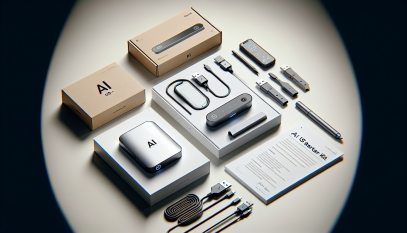
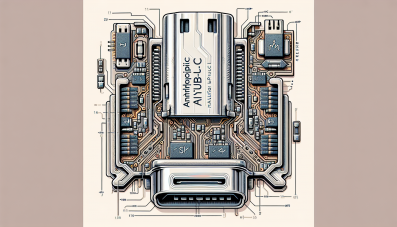
Open it up and there it is: a tiny USB-C dongle, along with some documentation guiding you on connecting this device so Claude can access your external data. The dongle itself? Looks like a no-name Chromecast ripoff you might discover buried among clearance HDMI cables at CEX. But remember, it’s what’s inside that matters, right?
The concept is straightforward: connect this marvel to your development environment, and you have a conduit between Claude and real-world data. That is, if you’re okay with tinkering with SDKs, JSON nonsense, and a whole heap of API tokens that might leave you dizzy.
Getting Claude to Stop Rambling and Start Doing Something Actually Useful
Claude on its own is smart, sure. It can summarize, translate, and even pretend to care about your emotional wellness. But if you want it to, for instance, interact with live databases, execute external commands, or fetch third-party information like a digital butler who’s actually competent – well, that requires effort. And this dongle is supposed to make that effort simpler.
It’s all linked to Anthropic’s tool-use framework which, to be fair, isn’t just a bunch of corporate mumbo jumbo. With this setup, Claude can engage with your custom APIs, retrieve up-to-date information, or even order a protein shake (oh, if only… maybe in Claude 4, right?).
Plug and Pray – Setup Isn’t for the Faint of Heart
Don’t anticipate plug-and-play. This isn’t a simple USB stick you shove into your laptop and expect AI wonders to occur. Nah, you’ve got to delve deeply into Anthropic’s developer documentation, set up your backend (carefully), and create the interface for Claude to utilize.
On the bright side, the documentation is fairly robust. A few too many American phrases for my liking, but it does the trick. You’ll still need to have some coding chops, so if your programming experience consists of adjusting the font size in Word – best to forget it.
The Use Cases – From Useless to Potentially Impactful
Let’s be real, 90% of the “AI integrations” people rave about are utter nonsense. Alexa telling you the weather? Groundbreaking. But here, there’s genuine substance.
You could have Claude manage IT tickets, streamline internal business processes, or serve as a voice interface for databases. It’s like constructing Jarvis, but instead of a charming British tone, you’ve got the personality of Clippy from Microsoft Word if he had been through rehab.
It’s also highly beneficial for secure environments. Anthropic champions privacy (that’s their whole angle), so nothing gets sent off to the cloud unless you authorize it. That’s fantastic if your company’s legal team would rather chew on glass than permit ChatGPT access.
Performance – As Quick as a Greggs Queue During Lunchtime
Once up and running, it’s excellent. Claude handles external API calls without breaking a sweat. I put it through some test scenarios, like retrieving sensor data from my smart thermostat (yes, I’m that guy), and it managed routing logic and translation in real-time. Not bad at all.
Latency is acceptable—not lightning quick, but not “go make a tea” slow either. Even my Jack Russell didn’t lose interest watching it run, and he has the attention span of a wet sock in a dryer.
The Drawbacks – It’s Not All Blossoms and Bliss
Now, let’s not get ahead of ourselves. There are indeed some flaws in this polished exterior. First, the lack of standardization. Anthropic’s method is solid, but it’s still designed for Claude. If you’re expecting to reuse one configuration across Claude, ChatGPT, and whatever Google has on the go this week, think again. You’ll be rewriting more interfaces than a rookie developer on a caffeine high.
And then there’s the price tag. This little plastic dongle doesn’t come cheap once you account for development time and the necessary backend setup. It’s more of an investment than a toy.
Additionally, you still need to program Claude with what’s accessible. It isn’t going to magically detect your mood and schedule you a yoga session after a tough work call (sadly). You’ve got to clearly define capabilities, permissions, and responses, or risk winding up with an AI that mistakenly books you a round trip to Sunderland. Total nightmare.
Conclusion – Worth a Try, if You’ve Got the Technical Know-How to Support it
Overall? I’m somewhat impressed, though grudgingly. Anthropic’s AI USB-C connector isn’t just another fleeting gimmick like a smart toaster or a Wi-Fi-enabled toilet brush. It’s a genuine tool, for serious developers, who are looking to get real work accomplished.
If you’ve got the skills to integrate it properly—and the patience to handle Anthropic’s slightly pretentious documentation—you’ll discover considerable potential here. It’s not suited for the average user, but for tech enthusiasts who dabble in AI without wanting to expose their entire setup to OpenAI’s prying eyes, it’s superb.
Just don’t expect it to finish your tasks while you relax at Wetherspoons. This isn’t Skynet… not yet, anyway.
Taming your data into LLMs just became simpler, though it’s not all perfect
Hands-On – Getting large language models to effectively perform useful tasks typically involves connecting them to external data, tools, or APIs. The issue is, there’s currently no standardized method to achieve this. Anthropic’s USB-C connector provides a straightforward route to AI integration, as long as you have the courage, the savvy, and the nerve for late-night debugging.
Summary
“If It Looks Like a Dongle, Quacks Like a Dongle, It Might Just Connect with Claude”
GadgetLad states: Anthropic’s dev kit dongle is genuinely impressive once you navigate the development setup and API management. It’s not magic, but in capable hands it’s a reliable way to harness large language models for practical tasks. Just don’t count on Claude to walk the dog or troubleshoot your router when it’s misbehaving. That responsibility still falls on you, mate.
Visit the full review at gadgetlad.co.uk.