
Honestly, I’m a fan of Samsung smartphones. If you were to insist that I use a Galaxy phone for all time, I’d likely be quite content.
However, what I can’t endorse are extremely lazy ‘upgrades’ that provide a notably poorer experience for the consumer. Regardless of the global RAM crisis, that’s simply not acceptable.
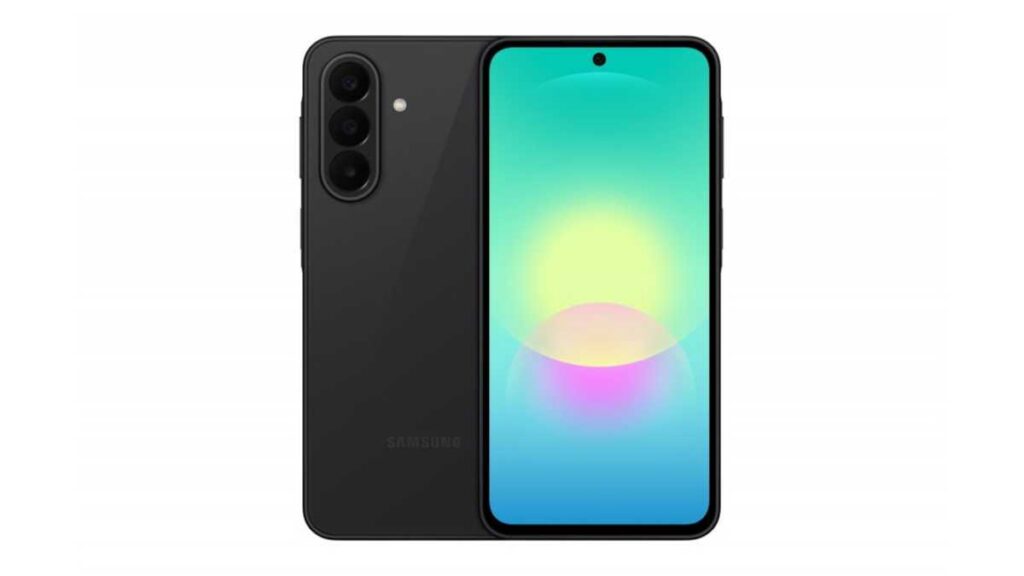
That’s precisely what Samsung is offering with the Galaxy A27, its newest budget-friendly device. I would label it a budget phone, but with the price increase, it isn’t even inexpensive enough for that category.
In contrast to the top mid-range devices, it’s severely lacking in features, and I struggle to see how I could recommend it to anyone.
Some minor enhancements – but nothing significant
Let’s first recognize what has genuinely improved on the Galaxy A27 in comparison to last year’s Galaxy A26.
The chipset – Qualcomm’s Snapdragon 6 Gen 3 – is a welcome upgrade from the Exynos 1380. Utilizing the advanced 4nm manufacturing process, it should enhance everyday performance and overall responsiveness, including gaming capabilities.
It also features the faster LPDDR5 RAM, which usually provides significantly improved data rates and enhanced power efficiency compared to the LPDDR4X found on the Galaxy A26. This may lead to better battery life, although the 5000mAh battery remains unchanged.
The A27 also eliminates the teardrop notch, replacing it with a standard punch hole for the selfie camera. This gives the phone a much more contemporary appearance, despite the bezel remaining unchanged.
Samsung
While both models utilize One UI 8.5, the Galaxy A27 additionally supports DeX, Samsung’s functionality that provides a desktop-like experience when connected to a monitor. Although not a complete substitute for Windows or macOS, it is a valuable feature for enhanced productivity, particularly when traveling.
These are all positive advancements, but you might argue that they alone aren’t enough to warrant a new phone. Unfortunately, the disappointing news continues.
A less favorable option than the Galaxy A26…
I genuinely wanted to appreciate the Galaxy A27, but Samsung’s regressions are hard to overlook.
The aspect that disappoints me the most is the water resistance. The A26 featured a commendable IP67 rating, protecting it from being submerged in up to 1m of freshwater, while the A27 reduces this to IP64. This indicates it can only withstand water splashes, which is unfortunate if you happen to drop it in a bathtub or a puddle.
I really wanted to like the Galaxy A27, but Samsung’s downgrades are impossible to ignore
This change has no relation to the design modification – virtually every flagship device now sports a punch-hole selfie camera, yet they maintain a complete IP68 rating. I fail to comprehend the justification for this downgrade, considering the materials used for both phones are the same.
Speaking of selfie cameras, the front-facing lens resolution has decreased from 13Mp to 12Mp. While knowing that megapixel count isn’t everything, be ready for slightly lower-quality selfies.
Samsung
That’s not all. The ultrawide lens has been downgraded from 8Mp to 5Mp, reinforcing its status as virtually useless. It now joins the unchanged 2Mp macro lens. Has a dedicated macro lens on a smartphone ever been practical?
Additionally, the A27 is marginally thicker at 7.8mm, and Bluetooth has been reduced from version 5.3 to 5.1. While these particular downgrades may be less noticeable, were they really necessary?
…but still at a higher price
So, although the Galaxy A27 has experienced some perplexing downgrades, surely Samsung has refrained from increasing the price, right?
Has a dedicated macro lens on a smartphone ever been useful?
Wrong. Priced at £319/$349, the A27 costs £20/$50 more than its predecessor. Considering the ongoing global RAM shortage, some price increases were foreseeable, but the phone must be worthwhile.
This is the worst of both scenarios. You get a phone that is lacking in several essential aspects, yet costs more. While we haven’t yet tested it at GadgetLad, I’d be surprised if it’s worth purchasing once it launches (3 July in the UK, 14 July in the US).
Alternatives are plentiful
If the Galaxy A27 were among the finest phones within its price tier, this careless ‘upgrade’ would be easier to accept. But it’s not.
A quick look at our best mid-range phones guide shows the Nothing Phone (4a). At £379, it’s £50 pricier than the A27, but very likely a far superior device overall. For something more affordable, the OnePlus Nord CE 5 is a great all-rounder available for £299.
Even though neither is sold in the US, I’d still opt for last year’s Pixel 9a over the A27. Recent large discounts mean it’s usually available for roughly the same £319/$349 price point.
Anyron Copeman / Foundry
Unless the Galaxy A27 proves to be an unexpected delight in practice, I’d recommend exploring other options. Even amid modest upgrades and price hikes, this release from Samsung is incredibly disappointing.
Conclusion: The Art of Avoiding a Dud Phone
In summary, the Galaxy A27 serves as an illustration of how not to innovate a smartphone. For a higher price, you receive fewer benefits – quite the trick, right? Save your funds and consider the alternatives, such as the Pixel 9a, unless you’re interested in a disappointing experience.