

US Regulators Finally Choose to Step Up Their Game
It’s about time, wouldn’t you say? US regulators are finally getting serious and taking a deep dive into these questionable tech mergers. You know the ones: two colossal firms shake hands, and suddenly half the team finds themselves out of a job? Yeah, those. While I’m not one to overly sentimentalize, it’s about time someone put a stop to these sketchy agreements before they spiral out of control.
What’s The Buzz?
Apparently, four federal regulators in the US have gathered to sip some tea and exchange insights regarding the impact of these tech mergers on the job market—not merely the tech sector. When two firms “merge” (corporate jargon for “let’s lay off a chunk of the workforce to save some bucks”), there can be ripple effects on salaries and employment. Now, these regulators believe it’s crucial to investigate whether these acquisitions are doing more harm than good, particularly for the working folks.
The Bureaucratic Squad: Who’s Investigating?
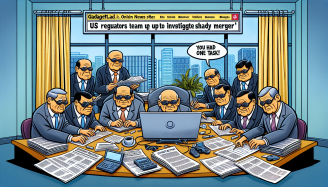
This isn’t just a lone bureaucrat tackling the issue, oh no. It’s a full task force: the Department of Justice Antitrust Division, the Federal Trade Commission, the Department of Labor, and the National Labor Relations Board. If you think that’s a mouthful, try saying it after a few drinks.
These individuals have joined forces like a superhero team to ensure corporations can’t just effortlessly buy out their competitors and then throw everyone out. They’re trading data like it’s a collection of trading cards and planning to use this information to hold these companies accountable.
Why Should You Care?
I can already hear you asking, “Why should this matter to me, GadgetLad? I just want my gadgets and peace!” Well, here’s the twist: when these firms merge and trim down their workforce, it doesn’t just impact those who lose their jobs. It has a cascading effect. Increased unemployment leads to tougher competition for available jobs, which then allows companies to reduce wages. And who gets the short end of the stick? You do, my friend. Lower wages mean less money for gadgets, and that’s not ideal.
Plus, let’s not overlook those instances when a massive acquisition results in a sprawling, disorganized company. The kind where you find yourself on hold forever just to hear some poor soul in a call center say they’ve “outsourced” your concern to who knows where.
Will This Actually Work, Or Is It Just Empty Promises?
Well, let’s not jump the gun. All of this sounds promising on paper, but we’ll see if they actually take action. We’ve witnessed this before: grand speeches from executives that fizzle out when it counts. However, this time, they’re emphasizing the importance of information sharing and collaboration. Perhaps they’ve finally realized that neglecting their responsibilities could lead to even more people finding themselves on the unemployment line.
And don’t get me started on how these mergers stifle innovation. When major firms consume their competition, they often cease to innovate because, let’s face it, why would they? They’ve already dominated. You end up with overpriced, underwhelming products that no sane individual would purchase if there were still viable options available.
Final Thoughts
So there it is—the US regulators have finally decided to stand up and confront these questionable tech mergers directly. Will it be effective? Only time will tell, but at least someone’s finally taking notice. If this results in fewer layoffs, improved gadgets, and less corporate nonsense, then I’m all in. And if not? Well, I’ll make sure to have a few choice remarks about it in the next blog entry, won’t I?
Questionable Mergers? Take Another Look, Folks!
Tech firms always seem to be forming alliances, but it appears these mergers might have to start adhering to some guidelines. With four US federal regulators pooling their efforts, these mergers could finally receive a thorough examination, especially regarding their impact on employment. So, let’s hope this regulatory gathering leads to meaningful change because we’re all a bit weary of the typical corporate antics.