

This week, I’ve received messages from both my mum and dad regarding the 40th anniversary of Live Aid, a charitable concert orchestrated by Bob Geldof on both sides of the Atlantic aimed at generating funds for famine relief in Ethiopia. The BBC has recently broadcast a two-part documentary about this significant moment in music history.
Queen’s Iconic Performance
Although the event showcased a diverse range of performers including Madonna, Paul McCartney, David Bowie, and Led Zeppelin, there’s one act that eclipses them all: the 21-minute showcase by the British rock group Queen, led by the renowned Freddie Mercury.
Like many around the globe, I’ve viewed this performance numerous times, utterly captivated by the showmanship displayed and the electric atmosphere of the stadium, with the band running through some of their most popular songs in rapid succession, including Radio Gaga, Bohemian Rhapsody, and We Will Rock You – along with Freddie’s charming interaction with the audience.
It’s such a pivotal moment in pop culture that even individuals who weren’t present live vividly recall the experience when they viewed it, feeling as though they were part of that magical crowd on their television screens. And honestly, I doubt we’ll ever witness anything comparable again.
Why? The answer is straightforward. Smartphones.
Documenting Concerts on Our Smartphones is Standard
When you observe Queen’s performance, every individual in the audience seems to clap in unison, fully engaged in the stage and the music of that moment. However, if you switch on any live concert broadcast, such as Glastonbury, you’ll notice at least half of the audience attempting to record the moment on their personal devices.
I can’t fault crowds for wanting to do this – it’s lovely to reminisce on these memories… and an ego boost to showcase on your socials that you’re there, in the venue (or field). I’ve engaged in it myself occasionally… and on a professional level, these events are a sure-fire way to evaluate a smartphone’s video capabilities. But as a result, that enchanting collective energy is disrupted.
People aren’t singing, dancing, and clapping in the moment. Instead, they’re concentrating on keeping their devices steady, viewing the performance through a small screen, instead of what’s right in front of them. It does come across as rather disheartening when you put it like that.
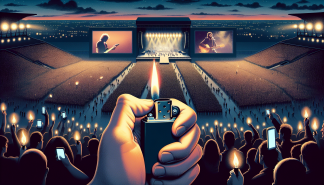
And although some users may only engage in this for a brief period, when replicated throughout a stadium, and it becomes evident from a wide-angle view how many people are doing it, it appears dystopian. This is particularly noticeable when performers first take to the stage, as that seems to be the moment people are most eager to capture. Consequently, if a camera pans to the audience, you’ll see it filled with phone screens capturing the same thing, often in what’s (let’s face it) considerably poorer quality.
Some audience behaviors are even more outrageous – I once attended a live scoring of War of the Worlds, and the woman before me livestreamed it to her personal Facebook account.
I wouldn’t have minded, had she not been doing it throughout the entire concert, at an awkward angle, for (from what I could see) a maximum of two viewers. My focus was interrupted by the glow of her smartphone in my peripheral vision. But I digress.
The main issue is that smartphones distract others from the live performance, plain and simple. But that’s not the sole concern.
Social Media Undermines the Element of Surprise
These clips also diminish the ‘TV moment’ aspect. If you weren’t one of the fortunate few who managed to secure a ticket to Wembley Stadium for Live Aid, you would instead view it on one channel, simultaneously with everyone else. That’s why the memories remain so vivid. It was groundbreaking.
Now, avoiding clips of concerts you plan to attend is like navigating a minefield. For instance, I have tickets to see Lady Gaga, who just launched her Mayhem Ball last night, and I’ve already been spoiled by my Instagram feed. I’m aware of some songs and outfits from the setlist that I hoped to experience as surprises in person.
I can try to avoid this by blocking keywords and attempting to alter my algorithm, but it will take considerable time and effort. I’m sure others are facing the same issue regarding the Oasis reunion tour, which started earlier this month.
I feel like I’ve known artists such as Beyonce, Taylor Swift, and Sabrina Carpenter all through secondhand experiences, thanks to social media clips. Even when these concerts are recorded and aired, I’m not particularly eager to watch them. After all, I’ve already seen the most buzzed-about moments on my social feed.
So, How Can We Restore the Magic of Queen’s Live Aid Concert?
The fix seems straightforward, right? Request that phones be stored away during gigs. But implementing this is not always feasible.
For instance, smartphones are now crucial for ensuring someone’s safety, especially for concertgoers who are meeting up with family or friends afterwards to head home. A universal ban could complicate matters and delay someone’s ability to make contact in an emergency.
Some artists have asked that smartphones not be utilized during their concerts, like Adele, Bruno Mars, and Madonna. Sabrina Carpenter even confessed she was contemplating adopting this approach. To assist fans in adhering to this guideline, they might be provided with a pouch or box to secure their phone, or a sticker to cover the camera.
However, once again, not everyone will honor an artist’s requests in today’s world. Just check YouTube, Instagram, or TikTok for any of the aforementioned stars, and I assure you’ll find clips from their concerts stealthily recorded by fans.
Even if some artists adopt this trend, others might choose not to. After all, social media often serves as free advertising for them. There are distraction strategies, like colored wristbands seen on the Cowboy Carter and Coldplay tours, that encourage audiences to focus on tech other than their phones, but that won’t deter everyone.
Regrettably, the truth is we might never enjoy concerts in the same manner as they were in the eighties. That Queen Live Aid performance was a snapshot in time, something that will likely never be experienced again in our current world.
If you wish to come closer to that experience, then the easiest thing you can do when attending a show next is to take a picture before the event kicks off and capture a memory (or for Insta), then tuck your phone away and simply enjoy the moment. I guarantee you’ll have a more enjoyable time if you do.
Summary: Put Your Phone Down, Mate!
Let’s be honest, everyone – the magic of yesteryear is struggling against our smartphones. But the next time you’re at a concert, try to embrace the present, and see if you don’t enjoy yourself more without the incessant urge to capture that perfect shot for the ‘Gram. Trust me, your memories are far superior to any unclear video.
