


Oh, Swiss Post? More like Swiss Toast! Malware Everywhere You Look

Alright, get ready, folks, because this is a wild one. Switzerland’s National Cyber Security Centre (NCSC) – yes, the fancy people meant to keep the nation’s cyber doors securely shut – has raised a flag about malware turning up like an uninvited visitor thanks to the Swiss postal service. That’s right, the same service that should be delivering Aunt Sally’s birthday card is now delivering malware. What a laugh.
QR Codes: The Sneaky Trojan Horse You Didn’t Expect
This isn’t your typical phishing drivel or Uncle Pete sending you weird links once more. Oh no, this gets fancy. They’re using QR codes. Yes, those trendy black-and-white squares plastered on everything from pint glasses to NHS apps. Apparently, the criminals have realized that if they stick one of those on a legitimate-looking letter, people will scan it without a second thought.
And here’s the punchline – you scan that thing thinking you’ll be tracking your parcel, but nope – you’ve just rolled out the red carpet for ransomware to crash on your phone or computer like a mate who had one too many after a night out.
Keeping It Mediocre with Simple Scams
According to Swiss Post – or as I prefer to call them, Swiss Toast – they’re noticing a rise in sketchy letters containing QR codes that link to malware. And let’s be real, friends, if you fall for this kind of con, maybe it’s time to stick with stamps instead of technology. These aren’t even cutting-edge scams. It’s just plain old foolishness, and it’s working, which is even more cringeworthy.
We’re talking about basic phishing tactics, but instead of clicking on some ridiculous link from a Nigerian prince, you’re scanning a QR code that looks like it’s from a delivery service. It’s their sneaky method of slipping in a malware package while you’re scratching your head, wondering why your package hasn’t shown up.
How They Hook You: The ‘Missed Delivery’ Honeytrap
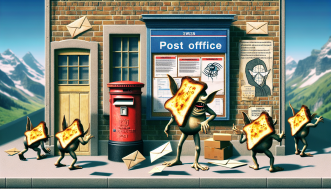
Consider this – you’re awaiting something from Amazon or perhaps some junk from eBay (likely some new gym gloves in my scenario), and a letter arrives stating that your parcel is delayed or marked as undelivered. But instead of the usual boring text or email (which, to be fair, we should all learn to disregard by now), it shows up in your mailbox along with a QR code to ‘track’ your parcel.
Well, guess what, genius? You’ve just been scammed. They know you’ll trust a letter more than an email, particularly considering the amount of junk emails we all receive now. Who would have thought the classic postal service would become the hackers’ new route in? Soon, they’ll be sliding malware into your Christmas cards.
Sketchy Domains – The Malware Mugging Arena
So, you scan the QR code, and where does it lead? Not to Swiss Post’s official site, that’s for sure. No, it’s off to some dodgy domain quicker than Steve Bruce can run out of excuses. You’ll arrive at a malware-infested wasteland, all pretending to be a legitimate service. But don’t be fooled, your device is getting hit hard. You might as well take a hammer to it yourself and save the hassle.
These QR codes often direct to sites that mimic the real thing but are chock-full of ransomware, trojans, or whatever concoction of digital trouble the hackers are serving up this week. The Swiss thought they were neutral, but they’re now in the thick of it.
Delivering Malware Like It’s a New Delivery Service
Now, picture this: every letter is a possible malware delivery service. Forget Amazon’s speedy delivery – your postman is now dropping off ransomware right at your door. Great, huh? Welcome to 2023, everyone.
Let me tell you – this isn’t solely a Swiss issue either. No, these strategies are likely to spread faster than a bad brew from a roadside café. If we’re not cautious, we’ll see it here in the UK with Royal Mail letters before you can shout, “Where’s me gran’s cookies?”
Don’t Be a Fool – How to Dodge This Nonsense
So, what’s the solution? Easy. Stop scanning every QR code as if it’s your ticket to a vacation in Spain. I understand, we’re all in a hurry, and “quick” seems to be our only pace these days, but spare a few moments and think before you scan.
Here’s a tip from your friend GadgetLad – if you receive a letter instructing you to scan a QR code to track your package, do your homework. Grab your phone, head to the official Swiss Post site (or Royal Mail if you’re not in Europe) and verify your tracking number the traditional way. If there’s a QR code on a letter you weren’t anticipating, toss it. Done and dusted.
Summary
Swiss Cheese? More Like Swiss Sleaze – Postal Malware is Going Crazy
What can we learn from all this? Aside from the fact that nothing is safe anymore – not even your post – we need to smarten up. If you’re not careful, you’ll be delivering malware to your devices faster than your local courier can throw a parcel over your fence. So, don’t be foolish, check before you scan, and stop assuming every QR code is just leading you to a sweet promotional deal.