

A (Hesitant) Shift in Tech
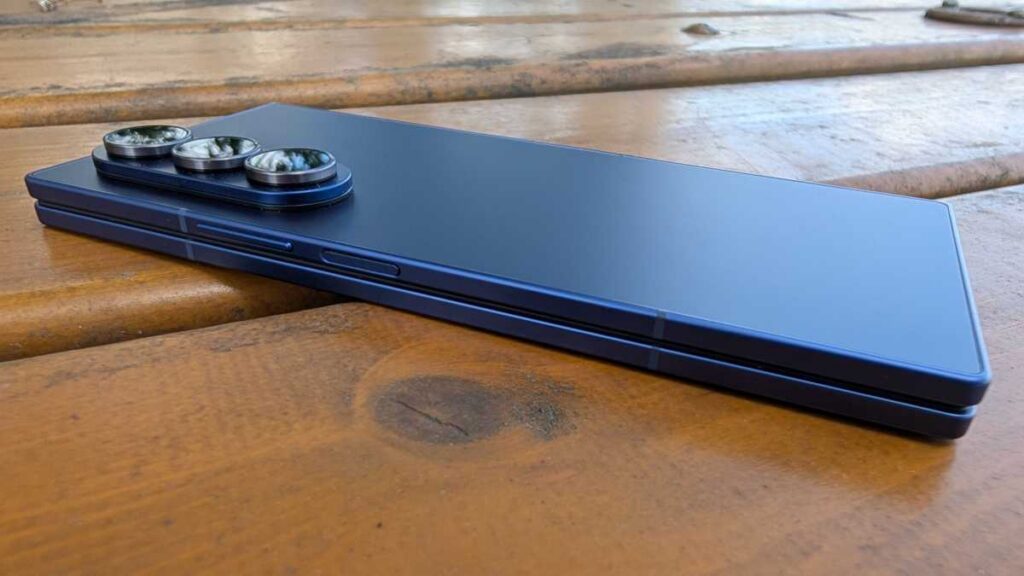
Two months ago, I cautiously transitioned to the Galaxy Z Fold 7.
This choice was largely influenced by software, as Samsung’s One UI 8 provided several essential features that assisted me in curbing my doomscrolling.
However, the anticipated compromises compared to standard smartphones weren’t particularly enticing, notably the elimination of an under-display fingerprint sensor.
The dual-screen feature of foldables renders this impractical, with the Galaxy Z Fold 7 utilizing a physical sensor incorporated into the power button instead.
Yet, rather than being a downgrade, the fingerprint sensor has proven to be a breeze for unlocking the device, logging into apps, and authorizing payments. Compared to my frustrating encounters with some under-display models, it’s been fantastic.
Mattias Inghe
This raises a broader question: if physical sensors are still markedly superior, why do we continue to use under-display versions? In the eight years since their inception, advancements have been sluggish.
After spending some time with the Galaxy Z Fold 7, I firmly believe it’s time to abandon under-display fingerprint scanners on all phones – not just foldable or budget models. Here are five reasons supporting this view.
Under-display Sensors Are Simply Not Up to Par
If under-display fingerprint scanners operated as swiftly and dependably as physical ones, there would be no competition. The convenience of having it right in front of you is unmatched.
But that is far from reality.
As someone who has reviewed numerous Android phones, I’ve encountered a plethora of scanners. Their reliability varies significantly, with some only unlocking my phone less than half the time and others reaching around 90%. My conclusion is straightforward: they are not trustworthy.
…if your fingers are slightly sweaty, or even worse, you accidentally drench your screen, you can essentially say goodbye to accessing your phone
Foundry | Alex Walker-Todd
Moreover, if your fingers are a bit sweaty, or even worse, you accidentally spill water on your screen, you can essentially say farewell to accessing your phone. These problems have been around for ages, but in my experience, no manufacturer has effectively addressed them.
Ultrasonic scanners tend to be quicker and more reliable than optical ones, yet I’ve faced my fair share of issues with those as well. I simply cannot depend on them, especially when I need immediate access to my phone.
This also poses a significant inconvenience when authenticating payments, logging into apps, or retrieving passwords. This inferior experience is a constant frustration whenever I use an Android phone, and I don’t foresee that changing in the near future.
Apple’s Avoidance Speaks Volumes
Given these grievances, it’s no surprise that Apple has entirely avoided under-display fingerprint sensors thus far.
After removing the Touch ID physical fingerprint scanner from the iPhone front in 2017, Apple replaced it with a secure 3D face unlock system known as Face ID. The rest, as they say, is history.
However, rather than typically arriving late with a superior version of under-display fingerprint sensors, Apple has completely distanced itself.
When Face ID provides a fast, secure alternative that functions even in low light, there’s little motivation to pair it with a subpar option
Mahmoud Itani / Foundry
It’s clearly evident that they have yet to meet the standards Apple requires. When Face ID presents a quick, secure alternative that operates even in darkness, there’s little incentive to couple it with an inferior choice.
When Apple introduced an updated Touch ID for some iPads, it fit it into the power button instead of beneath the display. This aligns with their reliable ‘it just works’ principle, which cannot be said for in-screen scanners.
Apple doesn’t succeed at everything, but the Android phone industry could benefit from emulating their approach here.
Rock-Solid Face Unlock
The fact that the iPhone has never adopted an under-display fingerprint sensor speaks volumes regarding today’s face unlocking technologies.
Face ID exceeds a mere basic face unlock, which can easily be tricked by photos or individuals with similar facial features (like twins). Instead, it utilizes an infrared camera to project thousands of dots onto your face to create a complex map, making it significantly more secure and reliable.
For many years, this was the sole face unlock of its type on mobile devices, but Android manufacturers are finally catching up.
Chris Hall / Foundry
Devices like the Honor Magic 8 Pro and Oppo Find X9 Pro employ similar technology to what Apple uses. Google’s approach since the Pixel 8 varies slightly, but it remains secure enough to substitute fingerprint scanners for accessing banking apps and confirming payments.
With an increasing number of options being released, it’s conceivable that fingerprint scanners of all varieties could soon become as useless as a chocolate teapot. And until that day…
Physical Scanners Keep It Discreet
A decade ago, having a fingerprint scanner on your phone was akin to broadcasting it on television. The iPhone’s Touch ID was prominently displayed beneath the screen, whereas LG, Motorola, and Samsung experimented with different placements on the back.
Naturally, this noticeable design was contentious, contradicting a minimalist philosophy. However, the era when such features were necessary has passed.
Foundry
For several years, manufacturers have been integrating their fingerprint sensors into power buttons, allowing them to seamlessly blend into the phone’s design. Additionally, they are often positioned exactly where you would naturally rest your finger, eliminating any awkward maneuvers to reach them.
The power button is here to stay, providing a long-term solution that remains concealed when not needed. In contrast, under-display scanners can be considerably harder to overlook.
Cost-Saving Opportunities
In 2026, phone pricing has become a significant issue. The ongoing global RAM shortage, driven by the immense demand from AI data centers, is elevating costs and increasing pressure on manufacturers.
Consequently, numerous phones have launched with elevated price points, very few upgrades, or a combination of both. For Samsung, there’s even a possibility of raising prices on existing models.
Dominik Tomaszewski / Foundry
Manufacturers are actively searching for ways to reduce production costs. Replacing under-display sensors with physical alternatives is a straightforward method to achieve this, with Intel Market Research estimating it to be 25-30% less expensive.
Making this simple change would enable companies to save a considerable amount while enhancing the user experience. It’s an obvious choice.
Move Past the Sunk-Cost Mindset
Eight years later, under-display fingerprint sensors continue to tease us. Though they appear appealing and seem impressive when functional, they frequently suffer from reliability issues that drive users to seek alternatives.
With excellent alternatives available in the form of physical sensors and secure face unlocking methods, there’s no reason to cling to technology that is both more expensive and less dependable.
I fully understand the attraction, and it was appropriate for manufacturers to explore this avenue for a period. However, it’s evident that the technology is stuck in stagnation, so now is the time to throw in the towel.
If under-display fingerprint sensors are phased out, I won’t shed a tear when the alternatives are much more sensible.
Summary: It’s All Gone Wrong with Under-Display Scanners
Alright, everyone, the under-display fingerprint scanner trend is about as useful as a chocolate teapot. With physical sensors blending seamlessly and face unlock growing more secure, perhaps it’s time to consign under-display technology to the back burner. It’s been a fun ride, but it’s time to get smart. Cheers!