
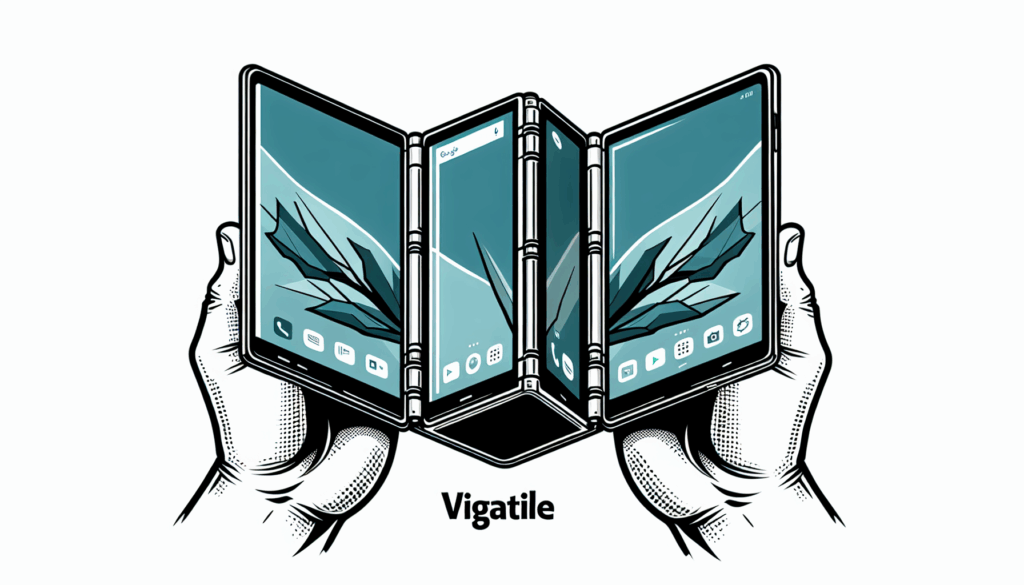

In case you didn’t catch the news, book-style foldables are no longer the most thrilling smartphones around.
The focus has shifted to tri-folds, but currently, Huawei is the only one on deck with one. It’s named the Mate XT, and based on what I’ve experienced, it’s the most practical foldable I’ve handled thus far.
Samsung may not be far behind. The company is rumored to release its own tri-fold phone later this month. Early reports indicated a limited launch in South Korea and China, but recent updates imply it could make its way to the US as well. If Samsung is feeling generous, we might even witness a UK and EU release, though nothing’s confirmed yet.
That said, if a tri-fold is truly on the horizon, it must provide more than just a larger screen to pique my interest. I’ve never been convinced by foldables, as beyond their novelty, you’re still settling despite shelling out a hefty sum. However, I’d genuinely think about purchasing one if it excelled in just three essential areas.
Genuine all-day battery life
A poor battery life in a phone? No way, that won’t work for me, and regrettably, that’s still the reality with most foldables. The OnePlus Open is the one foldable I’ve engaged with that offers decent screen-on time. Its 67W charging helps compensate for any deficiencies.
With the Huawei Mate XT, I achieved around six to seven hours of screen time with typical use, which included watching videos, browsing social media, and a bit of light gaming. That’s decent for a tri-fold.
Samsung, on the other hand, has persistently fallen behind in this area. The Galaxy Z Fold 7 barely manages six hours of screen-on time in my experience, and it still charges at a sluggish 25W, taking nearly an hour and a half to fully charge. I don’t expect Samsung to suddenly double its charging speeds, but at the very least, a larger battery ought to be essential this time.
A tri-fold form factor naturally encourages more screen time. If I’m planning to use it for media consumption or even light productivity, it needs to last. Otherwise, it’s just another fascinating form factor that remains underused because the battery can’t support it.
Samsung is reportedly testing a new three-cell battery design to boost capacity without making the device thicker, according to a patent discovered by Galaxy Club. This could elevate the capacity to around 5,000mAh, which is a reasonable figure.
One thing I can’t bear in a phone is feeble battery life
However, if we’re discussing a device that can unfold into something resembling a 10-inch display, 5,000mAh shouldn’t be viewed as impressive. It ought to be the bare essentials.
A true 16:9 layout and desktop-style apps
If there’s one thing I can state with certainty about the Samsung tri-fold, it’s going to be pricier than the Galaxy Z Fold 7, which already begins at £1,899/$1,999. If I’m forking out £2,000/$2,000 or more on a smartphone, I anticipate utilizing it for considerably more than simply scrolling through Instagram.
And it’s not like the phone will be lacking the hardware to do more. The tri-fold is believed to boast a Snapdragon 8 Elite chip, capable of managing workloads typically reserved for legitimate laptops. It’s not quite its successor in the latest Snapdragon 8 Elite Gen 5, but I don’t think you’ll notice the difference.
I’m not expecting to edit full-length films on a mobile device, but a tri-fold that unfolds into a 10-inch display transforms the scenario. With a proper 16:9 or 16:10 aspect ratio, you suddenly possess space to run desktop-style apps, from photo and video editing suites to productivity tools, in a manner that feels intuitive.
Gaming is another area where a tri-fold could indeed make sense. Modern mobile GPUs are quite capable of handling high-end titles, but the experience is always diminished by the limited screen size.
A larger expanded display alters that equation. Pair it with a Bluetooth controller, and you’ve got a complete gaming setup that still fits in your pocket. I’m not claiming it’ll replace a full console or run major AAA games, but if it can provide a decent experience on the go, that would justify the form factor much more than current foldables do.
The potential doesn’t halt at productivity or gaming. A large, well-proportioned display creates opportunities for multitasking, media creation, and entertainment in ways existing foldables simply cannot achieve.
If Samsung can demonstrate that one device can replace your phone, tablet, and even parts of your laptop workflow, the high price begins to feel warranted
Authentic flagship cameras
One of my main gripes with Samsung’s Galaxy Z Fold series since the Fold 4 has been the cameras. When you’re paying nearly £2,000/$2,000 for a phone, you expect the camera performance to be exceptional, and so far, that hasn’t been the case.
Part of the dilemma is structural. Foldables have a sleek profile, making it challenging to fit larger sensors and lenses into a thin enclosure. Some compromises are unavoidable. I’d seriously think about folding phones if they presented flagship-level cameras that could rival the performance of the finest slab phones, but I haven’t witnessed that occur.
Samsung made significant enhancements with the Galaxy Z Fold 7, swapping the 50Mp wide-angle lens for a 200Mp sensor. The Fold 7 may not be the absolute best camera phone at this price, but it finally competes with other premium devices.
If Samsung incorporates the same upgrades into its forthcoming tri-fold, it could eventually create a foldable that feels whole, a device that doesn’t just impress with its design but also delivers flagship performance across the board.
A potentially significant moment
Samsung’s tri-fold has me enthusiastic in a way that even the best phones never quite achieved. The idea of folding smartphones is undeniably fascinating, but they haven’t validated their expense beyond the novelty aspect.
Whenever I present a foldable from Samsung or Google, the response is always identical. Everyone acknowledges it appears impressive, yet there’s minimal genuine interest in actually purchasing one. They’re enjoyable to interact with, but not particularly compelling to buy.
Tri-folds might be the first step toward changing that. If Samsung can establish that a single device can replace your phone, tablet, and even portions of your laptop workflow, the high price starts to seem justified.
Considering other foldable formats? See our guide to the best folding phones available right now.
Conclusion
Why Acquire One Phone If You Can Have Three?
So there you have it, everyone. Samsung’s tri-fold might be the device to finally integrate your phone, tablet, and laptop requirements into one, if it succeeds in delivering on battery life, apps, and cameras. If not, well, it’s just another fancy foldable thing to admire in the storefront.